Government of IndiaGOVERNMENT OF INDIA
Skip to main content
English language
  • English
  • हिन्दी
Accessibility
Accessibility Tools
Color Adjustment
Text Size
Navigation Adjustment
Screen Reader iconScreen Reader
MyGov Twitter
MyGov Facebook
MyGov Youtube
MyGov Instagram
MyGov Linkedin
MyGov Whatsapp
Meri Sarkar Logo

Recent Searches

      Close

      Get Involved

      • Groups
      • Do/Tasks
      • Discuss
      • Poll/Survey
      • Blog
      • Talk
      • Quiz
      • MG Prime
      • Campaigns
      • Pledge
      • Podcast
      • Media
      • Periodicals

      MyGov States

      • Andaman & Nicobar Islands
      • Arunachal Pradesh
      • Assam
      • Chandigarh
      • Chhattisgarh
      • Dadra and Nagar Haveli and Daman and Diu
      • Goa
      • Gujarat
      • Haryana
      • Himachal Pradesh
      • Jammu And Kashmir
      • Jharkhand
      • Karnataka
      • Ladakh
      • Madhya Pradesh
      • Maharashtra
      • Manipur
      • Mizoram
      • Nagaland
      • Rajasthan
      • Tamil Nadu
      • Tripura
      • Uttar Pradesh
      • Uttarakhand
      • Lakshadweep
      • Odisha
      • Puducherry
      • Sikkim

      Microsites

      • Blog
      • Campus
      • Innovate India
      • Pledge
      • Quiz
      • Saathi
      • Self4Society
      • Transforming India
      • PM Events

      Get to Know

      • MyGov: An Overview
      • Associate with MyGov
      • Work at MyGov
      • Circulars
      • Pulse Newsletter
      • Tenders
      • Weekly Newsletter
      • Meity Dashboard
      • Sectors
      • Skills
      • Area of Interest
      • Age Group
      • National Events
      • Archive Sites

      Help/Feedback

      • Contact Us
      • FAQ
      • Feedback
      • Help
      • Link To Us
      • Public Grievance
      • Site Map
      • Terms & Conditions
      • Usage of Aadhaar
      • Web Information Manager
      • ICC
      • MyGov Social
      • Points and Badges
      • Website Policies
      user-profile
      Together, Let's Engage In Good Governance 
      Login/Register
      1. Home
      2. Discuss
      3. Inviting Ideas for Next Phase of Rural Sanitation
      Facebook X
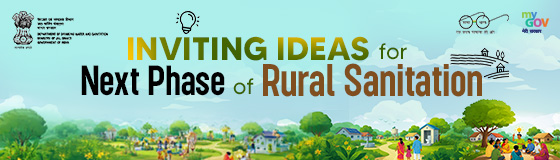
      Inviting Ideas for Next Phase of Rural Sanitation
      Start Date 01/08/2026 - 11:49
      End Date 02/10/2026 - 23:45
      Time zone: IST (GMT +5.30 Hrs)
      Login to Participate
      Sector:
      Water & Sanitation
      Created : 1/08/2026
      635
      Total Comments
      460
      Users Participated

      In the last 12 years, SBM(G) has evolved from a sanitation programme into a nationwide movement that has improved public health, enhanced dignity of women, empowered communities and promoted sustainable rural development. Building on the achievement of Open Defecation Free (ODF) status, SBM(G) 2.0 has expanded its focus to sustaining sanitation outcomes through interventions such as Individual Household Latrines (IHHLs), Community Sanitary Complexes (CSCs), Solid and Liquid Waste Management, Plastic Waste Management, Faecal Sludge Management, GOBARdhan, Information, Education and Communication (IEC) and Capacity Building. The current phase of the Mission is scheduled to conclude in March 2027.

      As the Department prepares the roadmap for the next phase of rural sanitation, it seeks ideas from citizens to sustain and strengthen the gains achieved under SBM(G) while addressing emerging challenges related to waste management, resource recovery, environmental sustainability, Operation & Maintenance (O&M) and long-term community ownership of assets and outcomes. Innovative, practical and scalable solutions are required to enhance sanitation service delivery, strengthen waste management systems, promote behavioural change and accelerate the transition towards a circular waste-to-wealth economy. Given that the diversities of rural areas from urban cities, suggestions and ideas, specific to rural scenarios will be highly appreciated. Along with these, with peri-urban areas / villages also growing fast and having characteristics of urban centers, solutions specific for such areas are also being sought.

      The success of SBM(G) has been driven by the spirit of Jan Bhagidari (People's Participation). Citizens, Gram Panchayats, SHGs, youth, Swachhagrahis and other stakeholders have been at the forefront of transforming rural sanitation and their continued participation will remain critical for sustaining these achievements. 

      Accordingly, the Department of Drinking Water and Sanitation (DDWS), Ministry of Jal Shakti in collaboration with MyGov, invites citizens, youth, Gram Panchayats, SHGs, academic and research institutions, development partners and other stakeholders to share their suggestions and ideas for the next phase of rural sanitation programme on the following:

      1. Areas to be taken up (including existing areas where gaps may be remaining)
      2. New technological interventions for SWM, GWM, FSM.
      3. Rural Sanitation 
      4. Solutions for treating pollution in small nallahs/rivulets discharging into rivers in rural areas.
      5. Adoption of solutions based on traditional knowledge and ancient wisdom in new settings for rural India. 
      6. Any other area related to the programme.

      The suggestions received will help and guide the next phase of SBM(G) and contribute to building cleaner, healthier and environmentally sustainable villages that will be strong contributors for achieving the goal of Viksit Bharat@2047.

      Participation Guidelines 

      1. All Citizens, youth (including students), Gram Panchayats & SHGs, academic and research institutions, development partners, NGOs and other stakeholders are invited to contribute ideas for shaping the next phase of rural sanitation and solid-liquid waste management under Swachh Bharat Mission (Grameen).
      2. For detailed information about SBM(G) Phase II, applicants may visit the SBM(G) Phase II operational guidelines available on website of the Department (https://swachhbharatmission.ddws.gov.in). The guidelines can also be assessed through: https://swachhbharatmission.ddws.gov.in/sites/default/files/Guidelines/SBMG%20Phase-II%20Operational%20Guidelines.pdf 
      3. Suggestions may be submitted on any of the major components of SBM(G), including Individual Household Latrines (IHHLs), Community Sanitary Complexes (CSCs), Solid Waste Management, Liquid Waste Management, Plastic Waste Management, GOBARdhan, Faecal Sludge Management, Information, Education and Communication (IEC) and Capacity Building. Global best practices forming the bases of solution, may also duly mentioned and referred.
      4. Participants are encouraged to propose innovative, technology-driven, scientific, managerial, practical, feasible and scalable solutions to address rural sanitation challenges and strengthen long-term sustainability.
      5. Suggestions should focus on supporting the Department of Drinking Water and Sanitation (DDWS), Ministry of Jal Shakti, in developing the roadmap for the next phase of rural sanitation for India.
      6. Participants are required to register on the MyGov platform and submit their suggestions through the prescribed online form.

      Sonu Kevat 4
      Sonu Kevat 4
      4 weeks 1 day ago

      विषय: देश के विकास और नागरिक व्यवहार में सुधार हेतु 4 व्यावहारिक सुझाव ​आदरणीय प्रधानमंत्री जी, ​देश के उज्ज्वल भविष्य और आम नागरिकों की सोच को सकारात्मक बनाने के लिए मैं कुछ व्यावहारिक सुझाव साझा करना चाहता हूँ: ​1. सोशल मीडिया और इंफ्लुएंसर्स का सही इस्तेमाल: देश के बड़े यूट्यूबर्स, इंफ्लुएंसर्स और फ़िल्म स्टार्स के साथ मिलकर जागरूकता अभियान चलाए जाएँ, ताकि युवा सोशल मीडिया पर फ़ेक न्यूज़ और भड़काऊ एजेंडे से बच सकें। ​2. सिनेमा के ज़रिए नागरिक फ़र्ज़ की सीख: फ़िल्मों में मनोरंजन के साथ-साथ साफ़-सफ़ाई, सार्वजनिक संपत्ति की सुरक्षा और शांति से बातचीत से विवाद सुलझाने जैसे विषयों को बढ़ावा दिया जाए। ​3. ड्राइविंग लाइसेंस का कड़ा और लाइव टेस्ट: सिर्फ़ काग़ज़ी या 2 मिनट के टेस्ट की जगह व्यावहारिक (Practical) ड्राइविंग टेस्ट और लाइव रिकॉर्डिंग अनिवार्य की जाए, ताकि सड़कों पर दुर्घटनाएँ और गुंडागर्दी कम हो। ​4. व्यावहारिक ट्रेनिंग पर ज़ोर: सरकारी और निजी क्षेत्रों में काम करने वाले नए लोगों के लिए फ़ील्ड ट्रेनिंग सख्त की जाए, जिससे सेवाओं की गुणवत्ता और पारदर्शिता बेहतर हो सके। ​उ

      Like 3
      Dislike 0
      • Reply
      Facebook X
      Praveenkumar_13261
      Praveenkumar_13261
      4 weeks 1 day ago

      Hello Sir, I wish to establish a "digital" *gaushala* (cow shelter) in my village—a facility that is fully modernized and provides high-quality housing, nutrition, and medical care to local stray cows, ensuring none die of hunger. I have often seen stray cows in nearby cities eating garbage off the streets; with proper nutrition and hydration, they could live much longer, productive lives. We could utilize their milk and use their dung to operate a biogas plant. I envision a state-of-the-art, pollution-free facility powered by renewable energy, where any cost savings are reinvested into the animals' care. This shelter would run on solar power and feature its own biogas plant, generating enough gas to supply nearby villages for free—thereby reducing our future dependence on other nations for essential fuels. I want to create a facility that offers the same level of comfort and amenities found in modern school or college hostels; instead of seeing our country's "Mother" (the cow)

      Like 3
      Dislike 0
      • Reply
      Facebook X
      ShreyaMishra_1780
      ShreyaMishra_1780
      4 weeks 1 day ago

      The best idea for improving water and sanitation in rural areas is to develop a “Smart Rural Water & Sanitation System” at the village level. Under this system, the government can provide a community water station with water purification, rainwater harvesting, and regular water-quality testing. Along with this, simple drainage systems can collect wastewater from bathrooms and kitchens and reuse it for gardening and agriculture after basic treatment. Every household should also have access to a functional toilet, while the Panchayat can arrange regular collection and segregation of household waste into wet and dry waste. Solar-powered pumps can reduce electricity costs, and a local village committee can monitor the system and report problems through a simple mobile helpline. This integrated approach can provide safe drinking water, better sanitation, cleaner surroundings, water conservation, and improved health for rural communities.

      Like 3
      Dislike 0
      • Reply
      Facebook X
      digvijay singh chahar
      digvijay singh chahar
      4 weeks 1 day ago

      Rural sanitation needs to move on from mere construction of toilets and focus on creating clean, sustainable and healthy villages. Sanitation includes toilets, safe drinking water, waste management, cleanliness, hygiene and behavioral change. Moving from construction of toilets to using the toilets – Making sure every household is regularly using the toilets they have been given, paying particular attention to women, children and old people. Better waste management – A proper system of segregation of wet and dry waste for villages and their composting, recycling and disposal. Liquid waste management – Treat the Greywater (from kitchens and bathrooms) for irrigation of gardens and agricultural fields where feasible. Technology-enabled villages – With use of mobile apps, GPS tracking, and sensors for real-time monitoring to track and report problems in rural sanitation. Women and youth participation – Local women’s groups, schools, self-help groups.

      Like 3
      Dislike 0
      • Reply
      Facebook X
      umakant.fulzele@gmail.com
      umakant.fulzele
      4 weeks 1 day ago

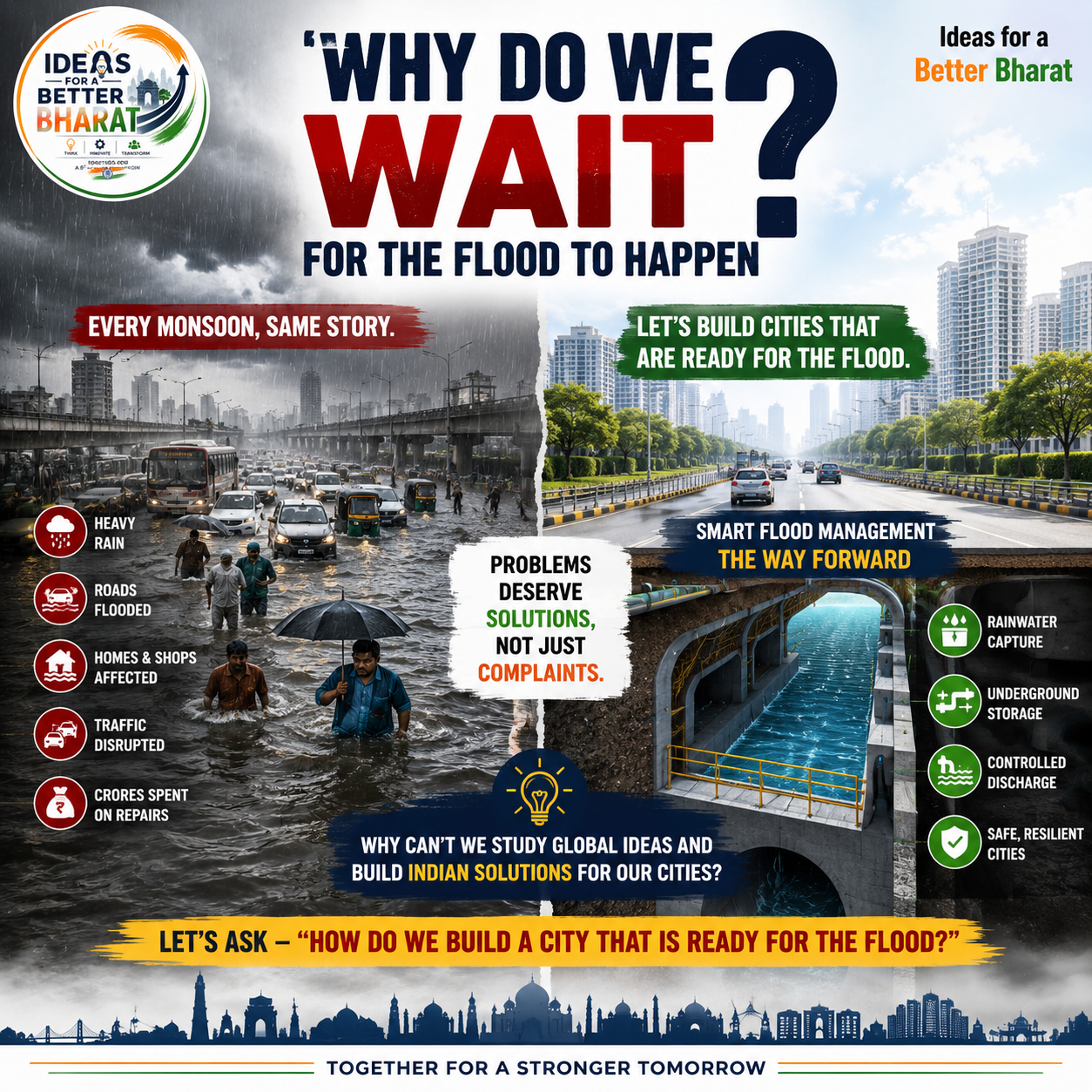
      Why do we wait for the flood to happen? Every monsoon, we see the same story: 🌧️ Heavy rain 🚗 Roads flooded 🏠 Homes and shops affected 🚑 Traffic disrupted 💰 Crores spent on repairs and emergency response But what if we start thinking differently? Countries like Japan have developed massive underground systems to temporarily store and divert excess rainwater during extreme rainfall. I'm not saying we should copy Japan. I'm saying — why can't we study the idea and develop an Indian solution for cities like Mumbai, Pune and others facing repeated urban flooding? Instead of only asking: “How do we manage the flood?” Let's start asking: “How do we build a city that is ready for the flood?” 🇮🇳 Ideas for a Better Bharat Problems deserve solutions, not just complaints

      comments image 185128
      Like 3
      Dislike 0
      • Reply
      Facebook X
      PRAVAT KUMAR SAHOO_2
      PRAVAT KUMAR SAHOO
      4 weeks 1 day ago

      A practical roadmap for moving from toilet construction to sustainable, safe and inclusive sanitation system

      (0.03 MB)
      Like 4
      Dislike 0
      • Reply
      Facebook X
      SHIVARAJU N
      SHIVARAJU N
      4 weeks 1 day ago

      Dear Sir My Name Shivaraju N from Rajajinagara Bangalore I have a made Traffic control planning project please allow me for meet Narendra Modi Sir Sir I need Presentation On that Thank you Shivaraju N (8722562277) Contact number

      Like 3
      Dislike 0
      • Reply
      Facebook X
      PUJAKUMARI_4873
      PUJAKUMARI_4873
      4 weeks 1 day ago

      I believe that the Swachh Bharat Mission (Grammin) has achieved phenomenal success over the past ten years. However, I want to emphasize that considering the work done on various aspects of sanitation in rural areas, there should be a dedicated Sanitation Department in every state. Due to the convergence of multiple departments, rural residents face a lot of negligence in execution. Solid and Liquid Waste Management (SLWM) activities suffer from delays and blame games ("yours vs. mine" attitude), affecting the villagers. Since this work is permanent in nature, the resources and manpower should also be employed on a permanent basis. Compared to cities, villages are performing many times better, but the system for maintenance and repair is not correct.As per the orders passed by the Supreme Court, the implementation of all the proposed activities is only possible if it is included in the school syllabus right from the primary classes. For this, it should be integrated as a dedicated sub.

      Like 3
      Dislike 0
      • Reply
      Facebook X
      TanzilaAhmedSayyed
      TanzilaAhmedSayyed
      4 weeks 1 day ago

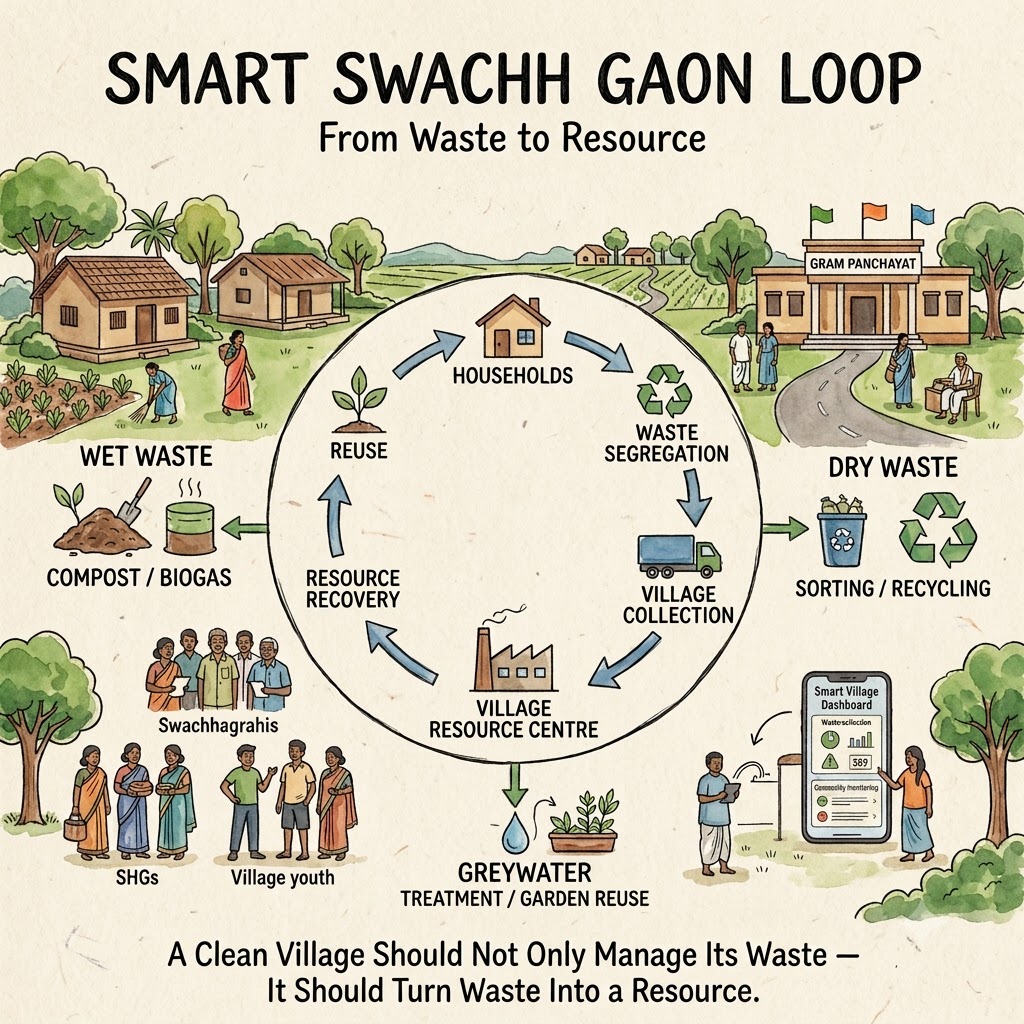
      “Smart Swachh Gaon Loop,” focuses on making rural waste management simple, sustainable and useful. It proposes waste segregation at the household level, village-level collection and processing, composting and biogas from wet waste, recycling of dry waste, greywater reuse, and active participation of SHGs, youth and Gram Panchayats. The aim is to turn waste into useful resources while creating cleaner, healthier and more sustainable villages.

      (0.03 MB) comments image 184958
      Like 4
      Dislike 0
      • Reply
      Facebook X
      hashandeepkumar
      hashandeepkumar
      4 weeks 1 day ago

      In my opinion, the next phase of rural sanitation should focus not only on building toilets but also on keeping villages clean and maintaining proper hygiene. Every household should use toilets regularly, dispose of waste properly, and separate wet and dry waste. The government and local communities should improve drainage, provide clean drinking water, and organize awareness programs. I believe that active participation of villagers, especially students and youth, can make sanitation programs more successful. A clean village will lead to better health, a safer environment, and a better quality of life for everyone.

      Like 4
      Dislike 0
      • Reply
      Facebook X
      • First page « First
      • Previous page ‹ Previous
      • …
      • Page 11
      • Page 12
      • Page 13
      • Page 14
      • Current page 15
      • Page 16
      • Page 17
      • Page 18
      • Page 19
      • …
      • Next page Next ›
      • Last page Last »
      Please Log In to submit a comment.
      Get Involved
      • Groups
      • Do/Tasks
      • Discuss
      • Blog
      • Poll/Survey
      • Talk
      • Quiz
      • MG Prime
      • Campaigns
      • Pledge
      • Podcast
      • Media
      • Periodicals
      Get to Know
      • MyGov: An Overview
      • Associate with MyGov
      • Work at MyGov
      • Circulars
      • Pulse Newsletter
      • Tenders
      • Weekly Newsletter
      • MeitY Dashboard
      • Sectors
      • Skills
      • Area of Interest
      • Age Group
      • National Events
      • Archive Sites
      Help & Support
      • Contact Us
      • FAQ
      • Feedback
      • Help
      • Link To Us
      • Public Grievance
      • Site Map
      • Terms & Conditions
      • Usage of Aadhaar
      • Web Information Manager
      • ICC
      • MyGov Social
      • Points and Badges
      • Website Policies
      Useful Links
      • MyGov Quiz MyGov Quiz
      • Transforming India Transforming India
      • MyGov Innovation MyGov Innovation
      • MyGov Pledge MyGov Pledge
      • MyGov Blog MyGov Blog
      • Self4Society Self4Society
      • Campus Program Campus Program
      • MyGov Saathi Saathi
      Follow us
      Twitter Twitter 33.11 + Lakh Followers Facebook Facebook 15.14 + Lakh Followers Instagram Instagram 30.73 + Lakh Followers YouTube YouTube 7.43 + Lakh Subscribers LinkedIn LinkedIn 1.63 + Lakh Followers Messenger Messenger 1.60 + Lakh Followers WhatsApp WhatsApp 910.05 + Lakh Followers DailyHunt DailyHunt 7.2 + K Followers Public Public 85.5 + K Followers ShareChat ShareChat 82.22K Followers Snapchat Snapchat View All
      QR Code

      Download the MyGov Mobile App Join us in building a New India on the move.

      App Store Play Store
      NIC logo

      © Content owned, updated and maintained by the MyGov Cell. This website belongs to MyGov, Ministry of Electronics & Information Technology, Government of India.
      Platform is designed, developed and hosted by National Informatics Centre.

      CQW - MyGov certificateCertified Quality Website
      • Meity
      • Digital India
      • National Portal of India
      • Data Portal

      Copyright © MyGov 2014

      secure-1 - Last Updated: September 29, 2026
      Top
      This website uses cookies to provide a better user experience.
      By clicking accept, you agree to the policies outlined in the Cookie Settings.