 GOVERNMENT OF INDIA

प्रारंभ तिथि
03/09/2026 - 18:00
अंतिम तिथि
30/09/2026 - 23:45
Time zone: IST (GMT +5.30 Hrs)
Created : 3/09/2026
279
Total Comments
210
Users Participated
Artificial Intelligence and Semiconductors are shaping the technological development landscape. As AI applications continue to expand, new possibilities are emerging across areas such as chip design, computing, manufacturing and advanced technologies.
Share your ideas and perspectives on the evolving landscape of AI and Semiconductors.
What new possibilities, ideas and innovations can emerge at the intersection of these technologies?
What new possibilities can emerge from AI and Semiconductor technologies?

3 weeks 6 days ago
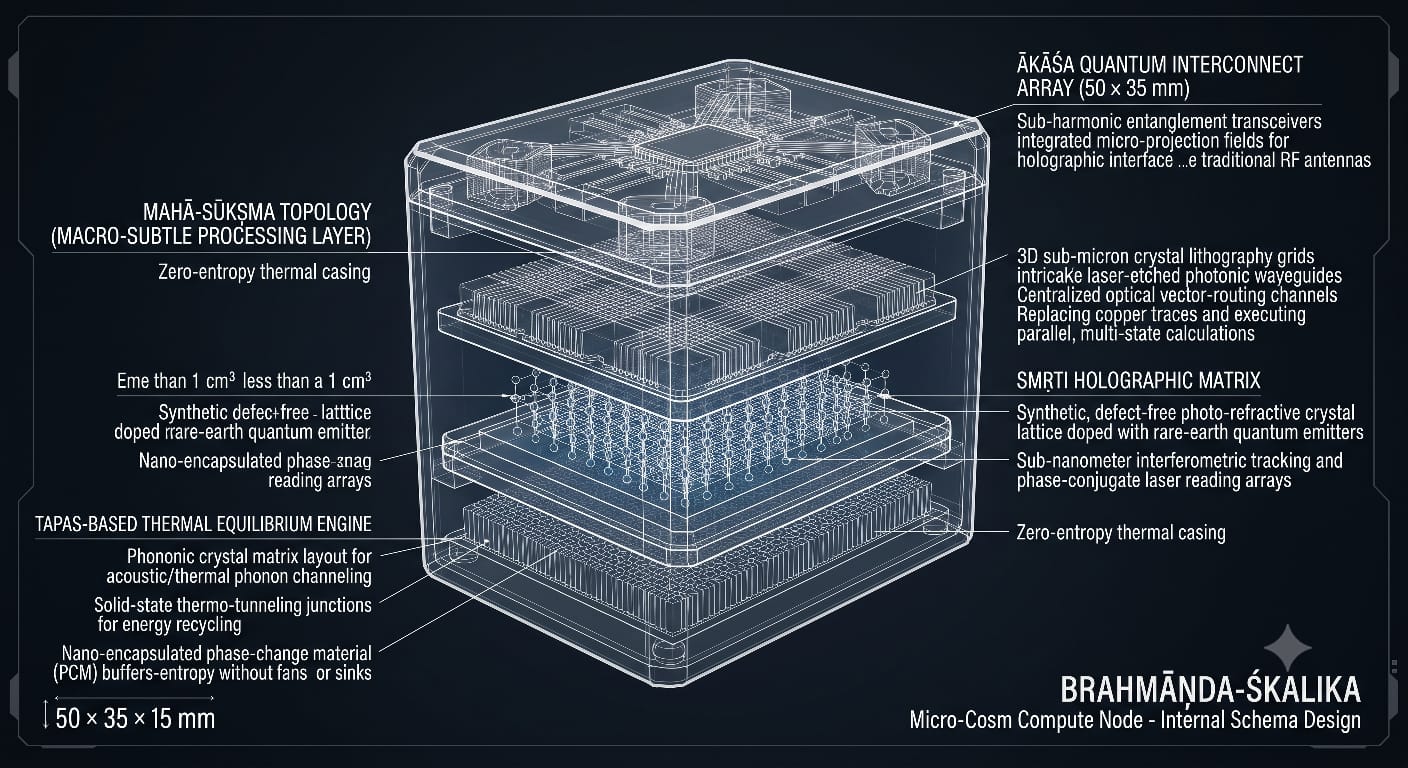
The Brahmāṇḍa-Śkalika framework represents a paradigm shift in computing architecture, transitioning legacy room- sized mainframes and desktop setups into a sovereign, matchbox-sized ( 50 × 35 × 15 mm) quantum-AI compute node. By merging ancient philosophical concepts of universal compression with advanced subatomic engineering, this model delivers massive enterprise and defense-grade processing power within an ultra-dense, secure footprint.
(0.05 MB)


4 weeks ago
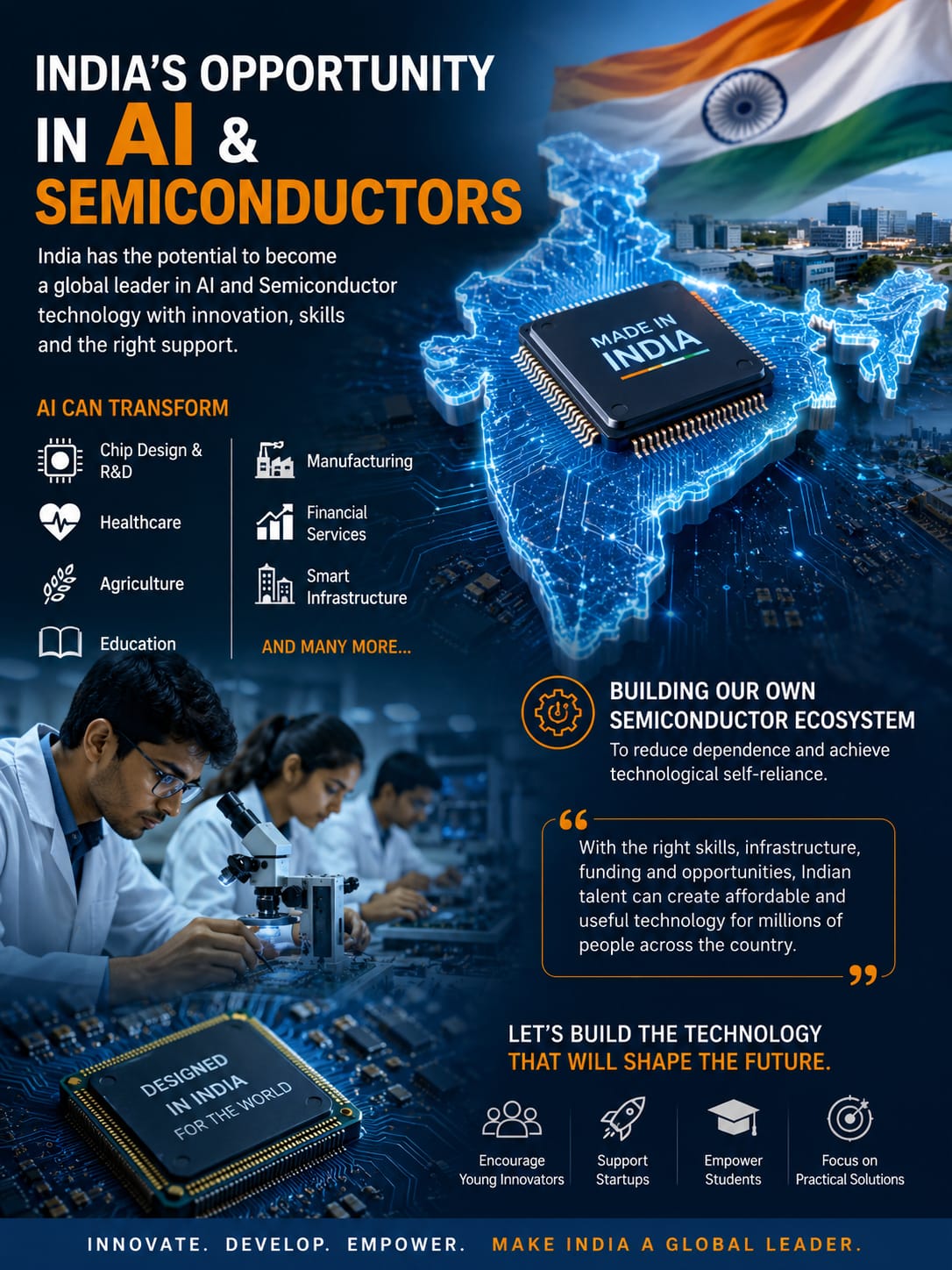
I believe India has a great opportunity to become a global leader in both AI and semiconductors. We should encourage young innovators, startups and students to work on practical solutions using these technologies. AI can help improve chip design, manufacturing, healthcare, agriculture, education and many other sectors. At the same time, India should focus on developing its own semiconductor technology so that we can reduce our dependence on other countries. With the right support, skills and opportunities, Indian talent can create affordable and useful technology for people across the country.

4 weeks ago
Now a day indian all farmers require how to use Ai(Artificial Intelligence) in our farming.
(0.31 MB)

4 weeks ago
capacities across multiple continents are steps in the right direction, but long-term resilience requires cultivating local talent pools, securing access to rare Earth minerals, and investing heavily in domestic research and development for next-generation materials.Conclusion and Strategic VisionThe future of AI is structurally tied to the future of the semiconductor. To sustain the current momentum of intelligence explosion, the industry must transition from brute-force compute scaling to systemic, multi-disciplinary innovation. This includes advancing standardizations for chiplet ecosystems, prioritizing silicon photonics and processing-in-memory architectures to shatter the memory wall, and aggressively utilizing AI to optimize the chip design process itself. Ultimately, the winners of the AI race will not just be those with the largest datasets or smartest algorithms, but those who successfully co-optimize their software with highly efficient,resilient, and specialized silicon in.

4 weeks ago
Collaborative Ecosystems: Stronger partnerships across semiconductor manufacturers, AI developers, and software platforms foster innovation and accelerate AI integration worldwide.
4 weeks ago
Neuromorphic and Quantum Computing: Emerging paradigms like neuromorphic chips that mimic brain function and quantum semiconductors could revolutionize AI capabilities with new forms of processing.
Security and Trust: Embedding robust hardware-level security into AI chips is becoming vital to safeguard data and ensure ethical AI deployment.
4 weeks ago
AI in Chip Manufacturing: AI-driven automation and predictive analytics optimize semiconductor fabrication, boosting yield, reducing defects, and shortening time-to-market.
Edge AI and Low-Power Chips: Growing demand for AI in edge devices drives development of semiconductors that balance performance with energy efficiency, enabling smart IoT, autonomous vehicles, and mobile AI.
4 weeks ago
Advanced Semiconductor Architectures: Developments such as 3D chip stacking and chiplet designs enhance processing power and bandwidth, crucial for handling AI's increasing data and computational needs.
4 weeks ago
AI-Specific Hardware: Traditional CPUs are giving way to specialized AI chips like GPUs, TPUs, and NPUs, designed to accelerate machine learning tasks efficiently, improving speed and power consumption.
Please
Log In
to submit a comment.