Government of IndiaGOVERNMENT OF INDIA
Skip to main content
English language
  • English
  • हिन्दी
Accessibility
Accessibility Tools
Color Adjustment
Text Size
Navigation Adjustment
Screen Reader iconScreen Reader
MyGov Twitter
MyGov Facebook
MyGov Youtube
MyGov Instagram
MyGov Linkedin
MyGov Whatsapp
Meri Sarkar Logo

Recent Searches

      Close

      Get Involved

      • Groups
      • Do/Tasks
      • Discuss
      • Poll/Survey
      • Blog
      • Talk
      • Quiz
      • MG Prime
      • Campaigns
      • Pledge
      • Podcast
      • Media
      • Periodicals

      MyGov States

      • Andaman & Nicobar Islands
      • Arunachal Pradesh
      • Assam
      • Chandigarh
      • Chhattisgarh
      • Dadra and Nagar Haveli and Daman and Diu
      • Goa
      • Gujarat
      • Haryana
      • Himachal Pradesh
      • Jammu And Kashmir
      • Jharkhand
      • Karnataka
      • Ladakh
      • Madhya Pradesh
      • Maharashtra
      • Manipur
      • Mizoram
      • Nagaland
      • Rajasthan
      • Tamil Nadu
      • Tripura
      • Uttar Pradesh
      • Uttarakhand
      • Lakshadweep
      • Odisha
      • Puducherry
      • Sikkim

      Microsites

      • Blog
      • Campus
      • Innovate India
      • Pledge
      • Quiz
      • Saathi
      • Self4Society
      • Transforming India
      • PM Events

      Get to Know

      • MyGov: An Overview
      • Associate with MyGov
      • Work at MyGov
      • Circulars
      • Pulse Newsletter
      • Tenders
      • Weekly Newsletter
      • Meity Dashboard
      • Sectors
      • Skills
      • Area of Interest
      • Age Group
      • National Events
      • Archive Sites

      Help/Feedback

      • Contact Us
      • FAQ
      • Feedback
      • Help
      • Link To Us
      • Public Grievance
      • Site Map
      • Terms & Conditions
      • Usage of Aadhaar
      • Web Information Manager
      • ICC
      • MyGov Social
      • Points and Badges
      • Website Policies
      user-profile
      Together, Let's Engage In Good Governance 
      Login/Register
      1. Home
      2. Discuss
      3. Inviting Ideas for Next Phase of Rural Sanitation
      Facebook X
      Inviting Ideas for Next Phase of Rural Sanitation
      Start Date 01/08/2026 - 11:49
      End Date 02/10/2026 - 23:45
      Time zone: IST (GMT +5.30 Hrs)
      Login to Participate
      Sector:
      Water & Sanitation
      Created : 1/08/2026
      620
      Total Comments
      453
      Users Participated

      In the last 12 years, SBM(G) has evolved from a sanitation programme into a nationwide movement that has improved public health, enhanced dignity of women, empowered communities and promoted sustainable rural development. Building on the achievement of Open Defecation Free (ODF) status, SBM(G) 2.0 has expanded its focus to sustaining sanitation outcomes through interventions such as Individual Household Latrines (IHHLs), Community Sanitary Complexes (CSCs), Solid and Liquid Waste Management, Plastic Waste Management, Faecal Sludge Management, GOBARdhan, Information, Education and Communication (IEC) and Capacity Building. The current phase of the Mission is scheduled to conclude in March 2027.

      As the Department prepares the roadmap for the next phase of rural sanitation, it seeks ideas from citizens to sustain and strengthen the gains achieved under SBM(G) while addressing emerging challenges related to waste management, resource recovery, environmental sustainability, Operation & Maintenance (O&M) and long-term community ownership of assets and outcomes. Innovative, practical and scalable solutions are required to enhance sanitation service delivery, strengthen waste management systems, promote behavioural change and accelerate the transition towards a circular waste-to-wealth economy. Given that the diversities of rural areas from urban cities, suggestions and ideas, specific to rural scenarios will be highly appreciated. Along with these, with peri-urban areas / villages also growing fast and having characteristics of urban centers, solutions specific for such areas are also being sought.

      The success of SBM(G) has been driven by the spirit of Jan Bhagidari (People's Participation). Citizens, Gram Panchayats, SHGs, youth, Swachhagrahis and other stakeholders have been at the forefront of transforming rural sanitation and their continued participation will remain critical for sustaining these achievements. 

      Accordingly, the Department of Drinking Water and Sanitation (DDWS), Ministry of Jal Shakti in collaboration with MyGov, invites citizens, youth, Gram Panchayats, SHGs, academic and research institutions, development partners and other stakeholders to share their suggestions and ideas for the next phase of rural sanitation programme on the following:

      1. Areas to be taken up (including existing areas where gaps may be remaining)
      2. New technological interventions for SWM, GWM, FSM.
      3. Rural Sanitation 
      4. Solutions for treating pollution in small nallahs/rivulets discharging into rivers in rural areas.
      5. Adoption of solutions based on traditional knowledge and ancient wisdom in new settings for rural India. 
      6. Any other area related to the programme.

      The suggestions received will help and guide the next phase of SBM(G) and contribute to building cleaner, healthier and environmentally sustainable villages that will be strong contributors for achieving the goal of Viksit Bharat@2047.

      Participation Guidelines 

      1. All Citizens, youth (including students), Gram Panchayats & SHGs, academic and research institutions, development partners, NGOs and other stakeholders are invited to contribute ideas for shaping the next phase of rural sanitation and solid-liquid waste management under Swachh Bharat Mission (Grameen).
      2. For detailed information about SBM(G) Phase II, applicants may visit the SBM(G) Phase II operational guidelines available on website of the Department (https://swachhbharatmission.ddws.gov.in). The guidelines can also be assessed through: https://swachhbharatmission.ddws.gov.in/sites/default/files/Guidelines/SBMG%20Phase-II%20Operational%20Guidelines.pdf 
      3. Suggestions may be submitted on any of the major components of SBM(G), including Individual Household Latrines (IHHLs), Community Sanitary Complexes (CSCs), Solid Waste Management, Liquid Waste Management, Plastic Waste Management, GOBARdhan, Faecal Sludge Management, Information, Education and Communication (IEC) and Capacity Building. Global best practices forming the bases of solution, may also duly mentioned and referred.
      4. Participants are encouraged to propose innovative, technology-driven, scientific, managerial, practical, feasible and scalable solutions to address rural sanitation challenges and strengthen long-term sustainability.
      5. Suggestions should focus on supporting the Department of Drinking Water and Sanitation (DDWS), Ministry of Jal Shakti, in developing the roadmap for the next phase of rural sanitation for India.
      6. Participants are required to register on the MyGov platform and submit their suggestions through the prescribed online form.

      Vijay kant patel_1
      Vijay kant patel_1
      4 weeks ago

      मेरे गाँव में सफाई की स्थिति काफी खराब है। गाँव में नियमित रूप से सफाई नहीं होती, कई बार साल में एक बार भी ठीक से सफाई नहीं हो पाती। जगह-जगह कचरा पड़ा रहता है और कचरा डालने के लिए डस्टबिन की भी व्यवस्था नहीं है। घरों से निकलने वाले गंदे पानी की निकासी के लिए कई जगह नाली नहीं है, जिससे पानी सड़कों और रास्तों पर जमा रहता है। बरसात में समस्या और बढ़ जाती है। मेरा सुझाव है कि हर गाँव में सफाई की नियमित व्यवस्था होनी चाहिए। सप्ताह में कम से कम एक बार सफाई हो और इसकी जिम्मेदारी तय की जाए। हर मोहल्ले में डस्टबिन या कचरा संग्रहण की व्यवस्था हो तथा घरों से कचरा उठाया जाए। जहाँ जरूरत हो वहाँ नाली या पानी की निकासी की व्यवस्था की जाए और उसकी नियमित सफाई भी हो। पंचायत में सफाई का रिकॉर्ड रखा जाए, ताकि पता रहे कि सफाई कब हुई। इससे स्वच्छता केवल अभियान तक सीमित न रहकर गाँव की नियमित व्यवस्था बन सकेगी।

      Like 3
      Dislike 0
      • Reply
      Facebook X
      sandiya_62
      sandiya_62
      4 weeks 1 day ago

      The next phase of rural sanitation should focus on creating clean, healthy, and sustainable villages through innovation, community participation, and smart waste management. Every household should have access to safe sanitation facilities, clean drinking water, and proper systems for managing solid and liquid waste. By encouraging people to work together, adopting eco-friendly solutions, and promoting awareness about hygiene, we can transform rural communities into healthier and greener places. The vision is to build Clean Villages, Healthy Lives, and a Sustainable Future for All.

      Like 4
      Dislike 0
      • Reply
      Facebook X
      rishabhjawariya@gmail.com
      rishabhjawariya
      4 weeks 1 day ago

      अगले चरण में प्रत्येक ग्राम पंचायत का SWM Infrastructure Gap Assessment कराया जाए और existing facilities को functional बनाने के लिए Integrated SWM Gap Closure Package लागू किया जाए। इसमें आवश्यकतानुसार: Dry Waste MRF Shed Wet Waste NadeP/Compost Pits with Shed 3-Phase Electricity Water Facility Workers' Toilet Approach Road Boundary Wall/Fencing Door-to-Door Collection Vehicles Segregation, storage और processing facilities शामिल हों।

      Like 3
      Dislike 0
      • Reply
      Facebook X
      Riteshpatidar_17
      Riteshpatidar_17
      4 weeks 1 day ago

      Swachh Bharat Ground Truth Network An Independent, Confidential Field-Verification System for Rural Sanitation The next phase of rural sanitation should not depend only on complaints or reports submitted by local authorities. We need a system that can independently discover problems on the ground and bring verified facts to the attention of the highest level of government. In my village,Chakrod-465335 the Swachh Bharat Abhiyan was implemented very effectively around six years ago. However, during the last three years, the garbage collection vehicle has reportedly stopped coming, and waste has gradually accumulated in different parts of the village. This shows how a successful government initiative can deteriorate when continuous ground-level monitoring is weak My Idea I propose the creation of a confidential and independent field-auditor network for rural sanitation These auditors would be randomly assigned to villages and would not disclose their id *FULL MSG IN PDF FILE*

      (0.03 MB)
      Like 3
      Dislike 0
      • Reply
      Facebook X
      PARTHADAS_81
      PARTHADAS
      4 weeks 1 day ago

      “ग्रामीण स्वच्छता के अगले चरण में प्रत्येक ग्राम पंचायत को ‘Zero Waste Village’ की दिशा में विकसित किया जाना चाहिए। इसके लिए घर-घर कचरा पृथक्करण, नियमित door-to-door collection, composting, plastic recycling, wastewater management और digital complaint monitoring की व्यवस्था की जाए। साथ ही स्कूलों, स्वयं सहायता समूहों, युवाओं और स्थानीय समुदायों को सक्रिय रूप से जोड़ा जाए। इससे स्वच्छता केवल एक सरकारी कार्यक्रम न रहकर गांव के प्रत्येक नागरिक की जिम्मेदारी बनेगी।”

      Like 3
      Dislike 0
      • Reply
      Facebook X
      RudraPratapyadav_161
      RudraPratapyadav_161
      4 weeks 1 day ago

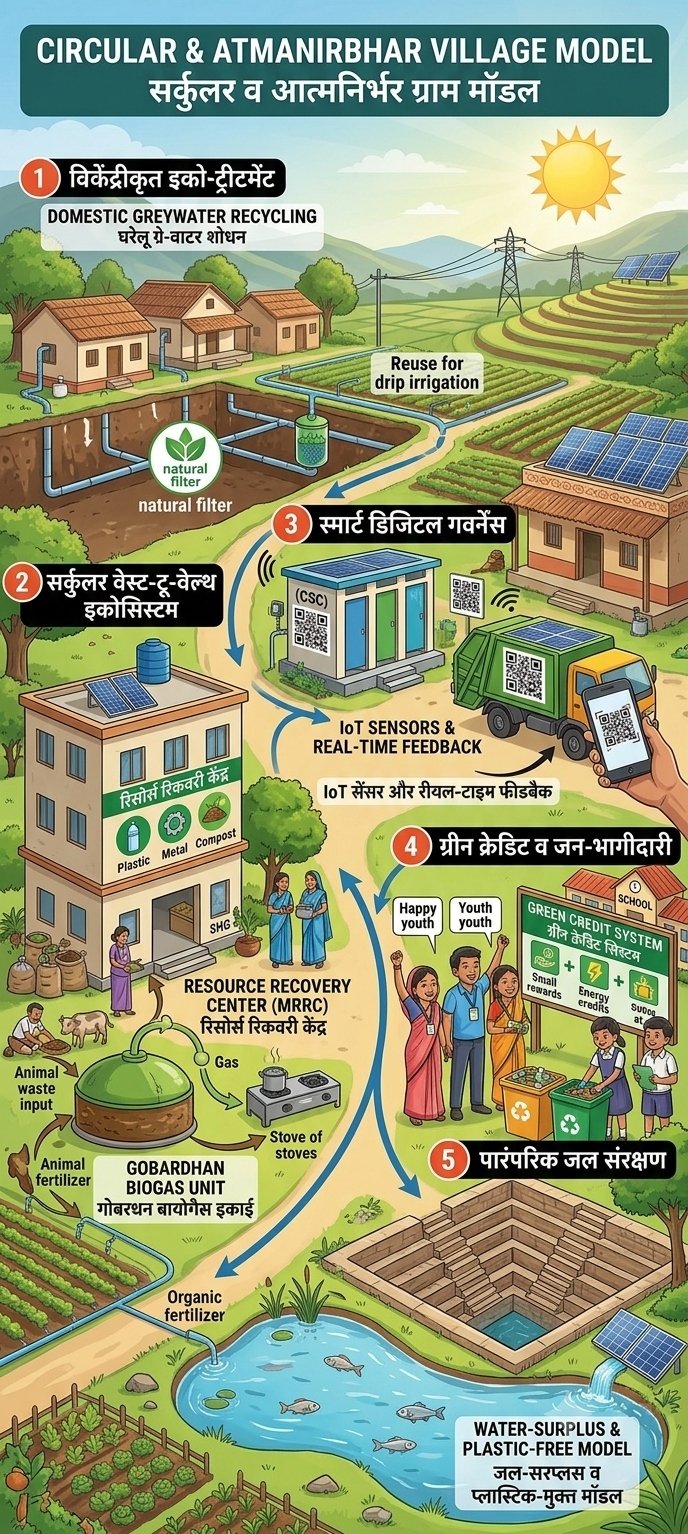
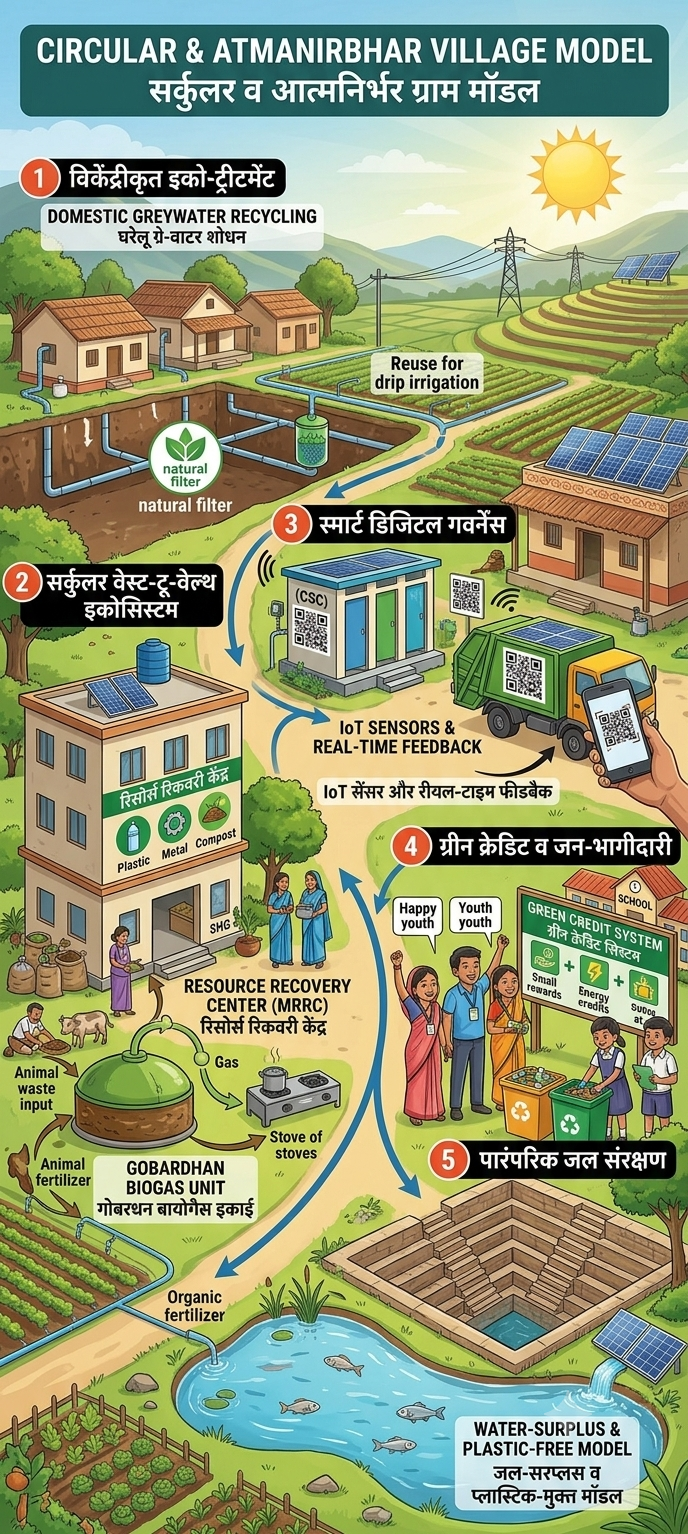
      'सर्कुलर व स्मार्ट विलेज' – SBM(G) कार्ययोजना: इको-ट्रीटमेंट: रीड-बेड तकनीक से गंदे पानी का शोधन कर सिंचाई में 100% पुन: उपयोग। वेस्ट-टू-वेल्थ: SHG संचालित रिसोर्स रिकवरी केंद्र व गोबरधन से जैविक खाद/बायो-गैस उत्पादन। स्मार्ट गवर्नेंस: CSC शौचालयों व वाहनों में IoT सेंसर और QR रियल-टाइम ट्रैकिंग। ग्रीन क्रेडिट: कचरा अलग करने वाले घरों को कर में छूट व स्वच्छता टास्क फोर्स।

      comments image 183244 comments image 183245
      Like 2
      Dislike 0
      • Reply
      Facebook X
      RudraPratapyadav_161
      RudraPratapyadav_161
      4 weeks 1 day ago

      आत्मनिर्भर व सर्कुलर ग्राम' मॉडल – SBM(G) के अगले चरण के लिए सुझाव: विकेंद्रीकृत ग्रे-वाटर शोधन (Nature-based Solutions): घरेलू गंदे पानी के लिए हर वार्ड स्तर पर फाइटोरीमेडिएशन (रीड-बेड) और रूट-जोन तकनीक से प्राकृतिक वाटर ट्रीटमेंट सिस्टम बने, ताकि शोधित पानी का उपयोग सीधे सिंचाई और भूजल रिचार्ज में हो सके। सर्कुलर वेस्ट इकोनॉमी (Waste-to-Wealth): हर पंचायत में SHGs द्वारा संचालित 'मिनी रिसोर्स रिकवरी सेंटर (MRRC)'। गोबरधन योजना को सोलर आधारित कंपोस्टिंग और बायो-सीएनजी ग्रिड से जोड़ना ताकि स्थानीय स्तर पर जैविक खाद और सस्ती ऊर्जा मिले। डिजिटल मॉनिटरिंग व IoT: सामुदायिक शौचालयों (CSCs) और कचरा वाहनों में QR-आधारित फीडबैक और IoT सेंसर ट्रैकिंग, जिससे रख-रखाव 24x7 पारदर्शी रहे। ग्रीन क्रेडिट व जन-भागीदारी: 100% कचरा अलग (Segregate) करने वाले परिवारों को 'स्वच्छता क्रेडिट' और स्थानीय करों में छूट। स्कूलों व युवाओं को 'स्वच्छता एंबेसडर' बनाकर जन-आंदोलन का रूप देना। पारंपरिक ज्ञान का पुनरुद्धार: गाँव के पुराने तालाबों और जलस्

      Like 2
      Dislike 0
      • Reply
      Facebook X
      JANMAJAYAPRADHAN_3
      JANMAJAYAPRADHAN_3
      4 weeks 1 day ago

      My suggestion is to develop a " village waste bank to protect Nallah in rural areas in rural areas the problem is not only about generation of waste but also the lack of proper system for managing and collecting it regularly and also the corporation of citizens. Every household can be encouraged to separate wet, dry and plastic waste. A small collection centre should be created at panchayat level where recyclable material can be collected and sent for recycling or the organic waste can be converted into compost or biogas ( depending on the village needs ) To encourage people's participation, households that regularly give properly segregated recyclable waste can be given small rewards and the gram panchayats decide the reward according to the household needs. Instead of giving only cash rewards, the panchayat can provide support that actually helps to improve family's living condition. This make reward more meaningful and encourages long term participation

      Like 3
      Dislike 0
      • Reply
      Facebook X
      ankitsingh_4931
      ankitsingh_4931
      4 weeks 1 day ago

      It's my suggestion is a most likely my partner The village are most beautiful in world aal parents and people are helpful, gentle man, strong and naturaly grow . So I like village people my suggestion are all citizens are one time living in villages they are you are good feel in villages then citys

      Like 2
      Dislike 0
      • Reply
      Facebook X
      Ashwini A 314
      Ashwini A 314
      4 weeks 1 day ago

      I suggest starting a “Waste-for-Plant” scheme in villages. Families that regularly separate and hand over recyclable waste to the Gram Panchayat or SHGs can receive a plant or seedling in return. A part of the value earned from recyclable waste can be used to provide more plants. Families can take responsibility for caring for the plants. This simple initiative can encourage waste segregation, reduce littering, promote recycling and make villages greener through Jan Bhagidari.

      Like 2
      Dislike 0
      • Reply
      Facebook X
      • First page « First
      • Previous page ‹ Previous
      • …
      • Page 16
      • Page 17
      • Page 18
      • Page 19
      • Current page 20
      • Page 21
      • Page 22
      • Page 23
      • Page 24
      • …
      • Next page Next ›
      • Last page Last »
      Please Log In to submit a comment.
      Get Involved
      • Groups
      • Do/Tasks
      • Discuss
      • Blog
      • Poll/Survey
      • Talk
      • Quiz
      • MG Prime
      • Campaigns
      • Pledge
      • Podcast
      • Media
      • Periodicals
      Get to Know
      • MyGov: An Overview
      • Associate with MyGov
      • Work at MyGov
      • Circulars
      • Pulse Newsletter
      • Tenders
      • Weekly Newsletter
      • MeitY Dashboard
      • Sectors
      • Skills
      • Area of Interest
      • Age Group
      • National Events
      • Archive Sites
      Help & Support
      • Contact Us
      • FAQ
      • Feedback
      • Help
      • Link To Us
      • Public Grievance
      • Site Map
      • Terms & Conditions
      • Usage of Aadhaar
      • Web Information Manager
      • ICC
      • MyGov Social
      • Points and Badges
      • Website Policies
      Useful Links
      • MyGov Quiz MyGov Quiz
      • Transforming India Transforming India
      • MyGov Innovation MyGov Innovation
      • MyGov Pledge MyGov Pledge
      • MyGov Blog MyGov Blog
      • Self4Society Self4Society
      • Campus Program Campus Program
      • MyGov Saathi Saathi
      Follow us
      Twitter Twitter 33.11 + Lakh Followers Facebook Facebook 15.14 + Lakh Followers Instagram Instagram 30.73 + Lakh Followers YouTube YouTube 7.43 + Lakh Subscribers LinkedIn LinkedIn 1.63 + Lakh Followers Messenger Messenger 1.60 + Lakh Followers WhatsApp WhatsApp 910.05 + Lakh Followers DailyHunt DailyHunt 7.2 + K Followers Public Public 85.5 + K Followers ShareChat ShareChat 82.22K Followers Snapchat Snapchat View All
      QR Code

      Download the MyGov Mobile App Join us in building a New India on the move.

      App Store Play Store
      NIC logo

      © Content owned, updated and maintained by the MyGov Cell. This website belongs to MyGov, Ministry of Electronics & Information Technology, Government of India.
      Platform is designed, developed and hosted by National Informatics Centre.

      CQW - MyGov certificateCertified Quality Website
      • Meity
      • Digital India
      • National Portal of India
      • Data Portal

      Copyright © MyGov 2014

      secure-1 - Last Updated: September 25, 2026
      Top
      This website uses cookies to provide a better user experience.
      By clicking accept, you agree to the policies outlined in the Cookie Settings.