Government of IndiaGOVERNMENT OF INDIA
Skip to main content
English language
  • English
  • हिन्दी
Accessibility
Accessibility Tools
Color Adjustment
Text Size
Navigation Adjustment
Screen Reader iconScreen Reader
MyGov Twitter
MyGov Facebook
MyGov Youtube
MyGov Instagram
MyGov Linkedin
MyGov Whatsapp
Meri Sarkar Logo

Recent Searches

      Close

      Get Involved

      • Groups
      • Do/Tasks
      • Discuss
      • Poll/Survey
      • Blog
      • Talk
      • Quiz
      • MG Prime
      • Campaigns
      • Pledge
      • Podcast
      • Media
      • Periodicals

      MyGov States

      • Andaman & Nicobar Islands
      • Arunachal Pradesh
      • Assam
      • Chandigarh
      • Chhattisgarh
      • Dadra and Nagar Haveli and Daman and Diu
      • Goa
      • Gujarat
      • Haryana
      • Himachal Pradesh
      • Jammu And Kashmir
      • Jharkhand
      • Karnataka
      • Ladakh
      • Madhya Pradesh
      • Maharashtra
      • Manipur
      • Mizoram
      • Nagaland
      • Rajasthan
      • Tamil Nadu
      • Tripura
      • Uttar Pradesh
      • Uttarakhand
      • Lakshadweep
      • Odisha
      • Puducherry
      • Sikkim

      Microsites

      • Blog
      • Campus
      • Innovate India
      • Pledge
      • Quiz
      • Saathi
      • Self4Society
      • Transforming India
      • PM Events

      Get to Know

      • MyGov: An Overview
      • Associate with MyGov
      • Work at MyGov
      • Circulars
      • Pulse Newsletter
      • Tenders
      • Weekly Newsletter
      • Meity Dashboard
      • Sectors
      • Skills
      • Area of Interest
      • Age Group
      • National Events
      • Archive Sites

      Help/Feedback

      • Contact Us
      • FAQ
      • Feedback
      • Help
      • Link To Us
      • Public Grievance
      • Site Map
      • Terms & Conditions
      • Usage of Aadhaar
      • Web Information Manager
      • ICC
      • MyGov Social
      • Points and Badges
      • Website Policies
      user-profile
      Together, Let's Engage In Good Governance 
      Login/Register
      1. Home
      2. Discuss
      3. Inviting Ideas for Next Phase of Rural Sanitation

      Inviting Ideas for Next Phase of Rural Sanitation

      Facebook X
      Inviting Ideas for Next Phase of Rural Sanitation
      Start Date 01/08/2026 - 11:49
      End Date 02/10/2026 - 23:45
      Time zone: IST (GMT +5.30 Hrs)
      Login to Participate
      Sector:
      Water & Sanitation
      Created : 1/08/2026
      540
      Total Comments
      382
      Users Participated

      In the last 12 years, SBM(G) has evolved from a sanitation programme into a nationwide movement that has improved public health, enhanced dignity of women, empowered communities and promoted sustainable rural development. Building on the achievement of Open Defecation Free (ODF) status, SBM(G) 2.0 has expanded its focus to sustaining sanitation outcomes through interventions such as Individual Household Latrines (IHHLs), Community Sanitary Complexes (CSCs), Solid and Liquid Waste Management, Plastic Waste Management, Faecal Sludge Management, GOBARdhan, Information, Education and Communication (IEC) and Capacity Building. The current phase of the Mission is scheduled to conclude in March 2027.

      As the Department prepares the roadmap for the next phase of rural sanitation, it seeks ideas from citizens to sustain and strengthen the gains achieved under SBM(G) while addressing emerging challenges related to waste management, resource recovery, environmental sustainability, Operation & Maintenance (O&M) and long-term community ownership of assets and outcomes. Innovative, practical and scalable solutions are required to enhance sanitation service delivery, strengthen waste management systems, promote behavioural change and accelerate the transition towards a circular waste-to-wealth economy. Given that the diversities of rural areas from urban cities, suggestions and ideas, specific to rural scenarios will be highly appreciated. Along with these, with peri-urban areas / villages also growing fast and having characteristics of urban centers, solutions specific for such areas are also being sought.

      The success of SBM(G) has been driven by the spirit of Jan Bhagidari (People's Participation). Citizens, Gram Panchayats, SHGs, youth, Swachhagrahis and other stakeholders have been at the forefront of transforming rural sanitation and their continued participation will remain critical for sustaining these achievements. 

      Accordingly, the Department of Drinking Water and Sanitation (DDWS), Ministry of Jal Shakti in collaboration with MyGov, invites citizens, youth, Gram Panchayats, SHGs, academic and research institutions, development partners and other stakeholders to share their suggestions and ideas for the next phase of rural sanitation programme on the following:

      1. Areas to be taken up (including existing areas where gaps may be remaining)
      2. New technological interventions for SWM, GWM, FSM.
      3. Rural Sanitation 
      4. Solutions for treating pollution in small nallahs/rivulets discharging into rivers in rural areas.
      5. Adoption of solutions based on traditional knowledge and ancient wisdom in new settings for rural India. 
      6. Any other area related to the programme.

      The suggestions received will help and guide the next phase of SBM(G) and contribute to building cleaner, healthier and environmentally sustainable villages that will be strong contributors for achieving the goal of Viksit Bharat@2047.

      Participation Guidelines 

      1. All Citizens, youth (including students), Gram Panchayats & SHGs, academic and research institutions, development partners, NGOs and other stakeholders are invited to contribute ideas for shaping the next phase of rural sanitation and solid-liquid waste management under Swachh Bharat Mission (Grameen).
      2. For detailed information about SBM(G) Phase II, applicants may visit the SBM(G) Phase II operational guidelines available on website of the Department (https://swachhbharatmission.ddws.gov.in). The guidelines can also be assessed through: https://swachhbharatmission.ddws.gov.in/sites/default/files/Guidelines/SBMG%20Phase-II%20Operational%20Guidelines.pdf 
      3. Suggestions may be submitted on any of the major components of SBM(G), including Individual Household Latrines (IHHLs), Community Sanitary Complexes (CSCs), Solid Waste Management, Liquid Waste Management, Plastic Waste Management, GOBARdhan, Faecal Sludge Management, Information, Education and Communication (IEC) and Capacity Building. Global best practices forming the bases of solution, may also duly mentioned and referred.
      4. Participants are encouraged to propose innovative, technology-driven, scientific, managerial, practical, feasible and scalable solutions to address rural sanitation challenges and strengthen long-term sustainability.
      5. Suggestions should focus on supporting the Department of Drinking Water and Sanitation (DDWS), Ministry of Jal Shakti, in developing the roadmap for the next phase of rural sanitation for India.
      6. Participants are required to register on the MyGov platform and submit their suggestions through the prescribed online form.
      ManojnathJakhar
      ManojnathJakhar
      2 weeks ago

      मौजूदा कमियों को दूर करने और नीतिगत मजबूती के सुझाव ​पेरी-अर्बन (Peri-Urban) हब मॉडल: तेजी से विकसित हो रहे गांवों और शहरी सीमा से सटे कस्बों के लिए 'अर्बन-रूरल कन्वर्जेंस नीति' लागू की जाए, जहां अपशिष्ट प्रबंधन को नजदीकी नगर पालिकाओं के ट्रीटमेंट प्लांट से जोड़ा जाए। ​ओ एंड एम (O&M) का स्थायी वित्तपोषण: सामुदायिक शौचालयों और कचरा प्रबंधन इकाइयों के संचालन के लिए ग्राम पंचायतों में नाममात्र का स्वच्छता शुल्क (User Charge) और 15वें वित्त आयोग के टाइड ग्रांट का 40% केवल रखरखाव हेतु अनिवार्य रूप से सुरक्षित किया जाए। ​जलवायु-लचीला (Climate-Resilient) इन्फ्रास्ट्रक्चर: बाढ़ प्रभावित और उच्च भूजल स्तर (High Water Table) वाले क्षेत्रों में पारंपरिक गड्ढों के स्थान पर एलिवेटेड और इको-सैन (Eco-San) शौचालयों का अनिवार्य निर्माण। ​SWM, GWM और FSM के लिए नए तकनीकी हस्तक्षेप ​ब्लॉक-स्तरीय स्मार्ट MRF (मटेरियल रिकवरी फैसिलिटी): 10-15 ग्राम पंचायतों के क्लस्टर पर एक सेमी-ऑटोमेटेड प्लास्टिक पृथक्करण व बेलिंग यूनिट स्थापित की जाए, जिसमें डिजिटल बारकोड ट्रैकिंग हो।

      Like 3
      Dislike 0
      • Reply
      Facebook X
      Sanchaniyapragna
      Sanchaniya pragna
      2 weeks ago

      The Swachh Bharat Mission has made huge progress in building toilets and making villages Open Defecation Free. Now, as we enter the next phase of Rural Sanitation, the focus must shift from just infrastructure to sustainability, behavior change, and waste management.The next phase should focus on greywater treatment, solid waste management, and plastic waste collection in every panchayat. We need low-cost, eco-friendly technologies like bio-toilets, soak pits, and composting units that are easy to maintain. Community involvement is key. Women’s Self-Help Groups and youth can lead awareness drives and manage local sanitation facilities.Digital tools can help track cleanliness, report issues, and reward the cleanest villages. Schools should include hygiene education to build habits early. By inviting ideas from citizens, experts, and local bodies, we can make rural India not just ODF, but truly clean, healthy, and sustainable. Let’s build a Swachh and Sashakt Gaon together.

      Like 3
      Dislike 0
      • Reply
      Facebook X
      kunal kishore_11
      kunal kishore
      2 weeks ago

      Rural sanitation is a big concern for our country. It should be do at war footing level. I want to give some suggestion. 1 social awareness campaign should be started for increase awareness among rural people. 2 safai ambassador should be selected for all panchayat. 3 rural sanitation portal will be opened for given ideas and suggestion. 4 rural sanitation inspector should be appointed for maintain it properly. 5 A heavy fine should be imposed on those people who have responsible for it.

      Like 2
      Dislike 0
      • Reply
      Facebook X
      ramanand gudimanchi
      ramanand gudimanchi
      2 weeks ago

      Link social benefits with good conduct and waste management, waste seperation a paid service. In Australia every bottle, that can recycled ♻️ gets 50 cents.

      Like 2
      Dislike 0
      • Reply
      Facebook X
      ramanand gudimanchi
      ramanand gudimanchi
      2 weeks ago

      How will all these great programs be successful, unless they are taught from primary school, temples, mosques, gurdwaras and all religious places, please make civic sense as mandatory along with traffic sense. 2. Do not give scholarship, reservations or any clear exams unless 100 hours of voluntary work is done in any of the specific list including sanitation, traffic management, doing a approved hobby project. 3. Mandatory scout guilds linked to armed forces in any of list of your programs, with achievement certificate.

      Like 1
      Dislike 0
      • Reply
      Facebook X
      Ankushmygov
      Ankushmygov
      2 weeks ago

      Mygov

      Like 2
      Dislike 1
      • Reply
      Facebook X
      Vinit Gavankar
      Vinit Gavankar
      2 weeks ago

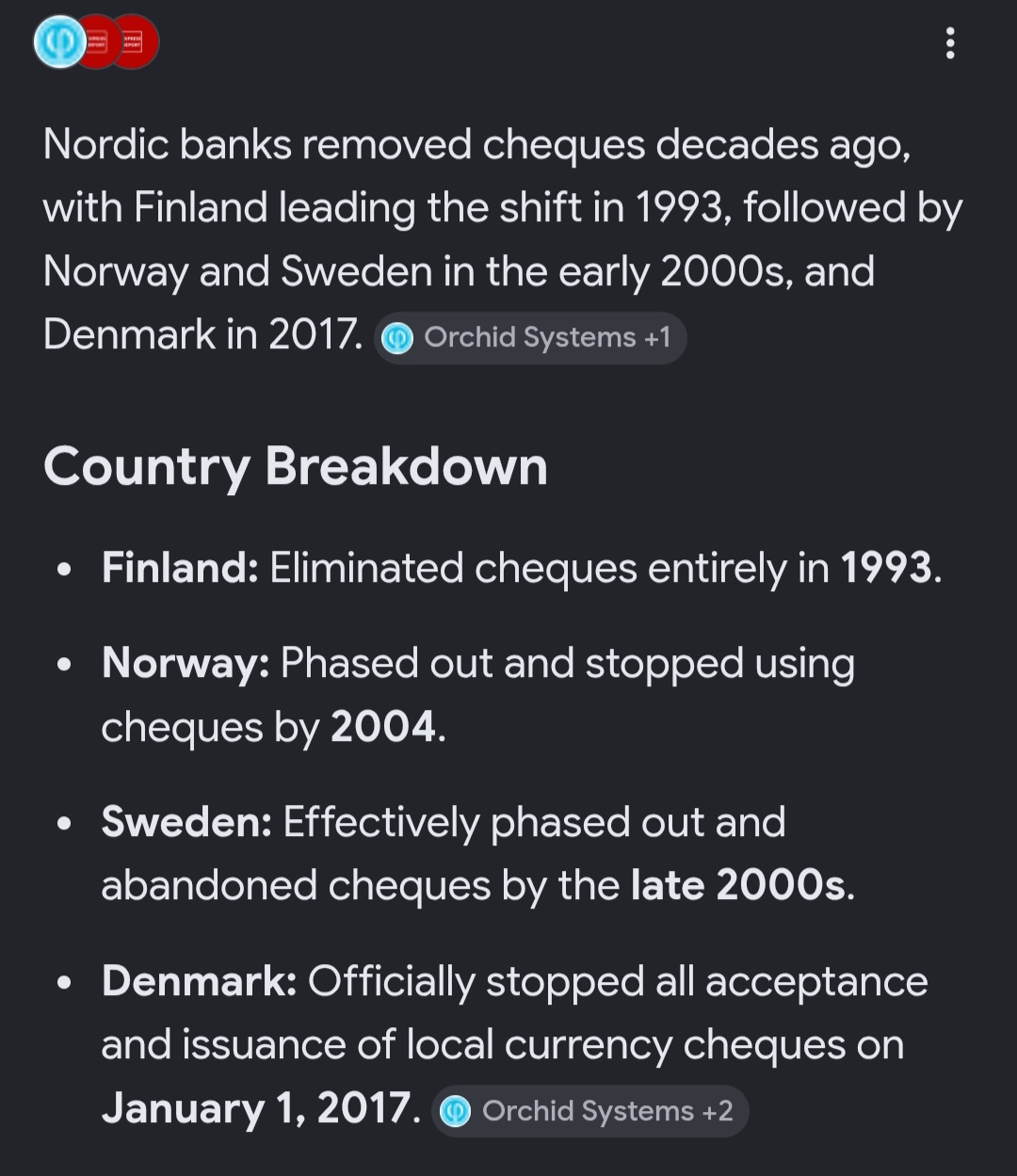
      Like Nordic countries, we need to remove cheque payments from the banking system. Instead, we need to keep just demand drafts and online payments. This will reduce the workload in the banking system by 30%. It will also avoid fraud transactions and cheque bouncing. Overall, it will reduce corruption in India. Hope the government will implement this soon.

      comments image 177607
      Like 2
      Dislike 0
      • Reply
      Facebook X
      rajesh muduli_1
      rajesh muduli_1
      2 weeks ago

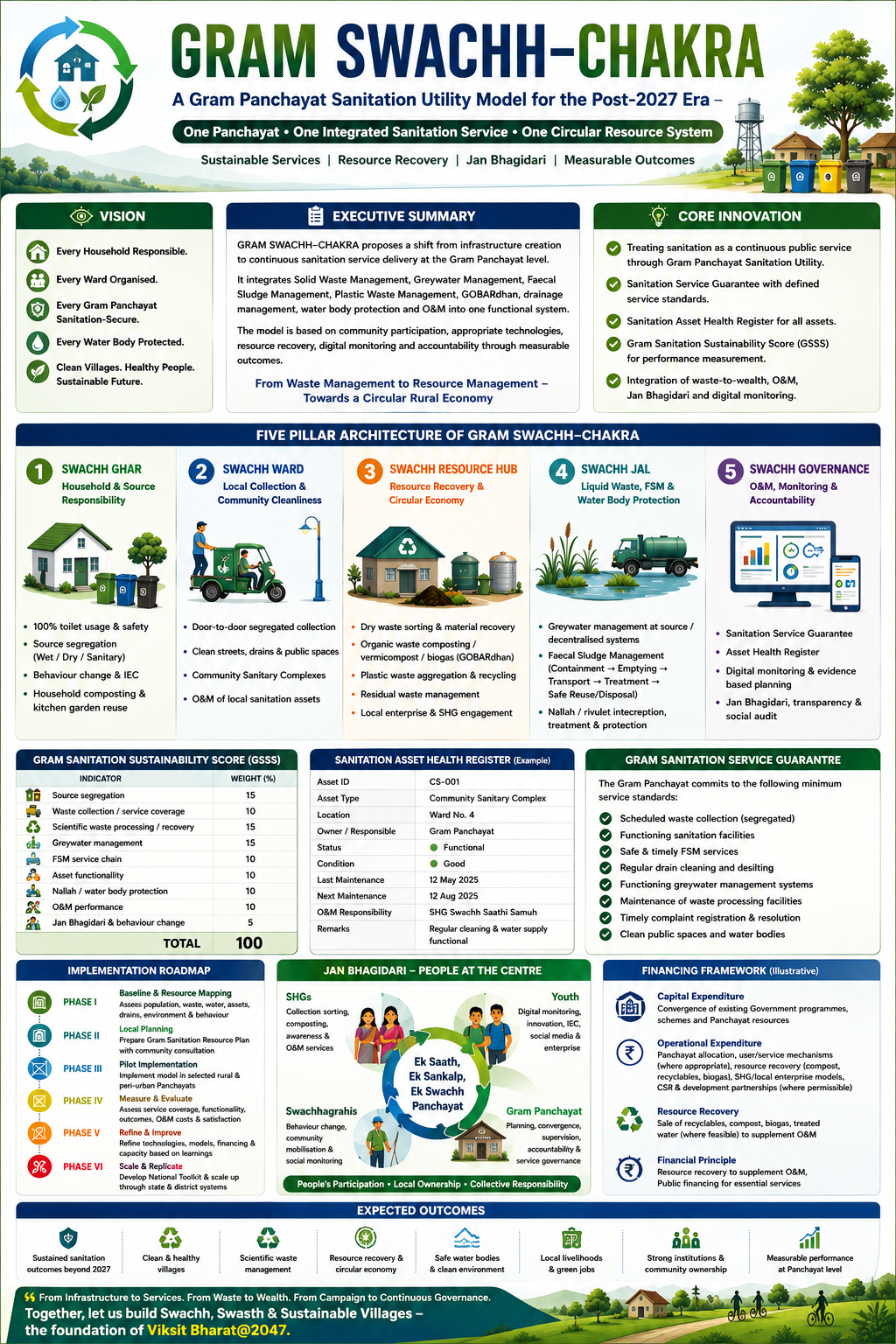
      The next phase of SBM(G) must shift from infrastructure creation to continuous service delivery. I propose GRAM SWACHH-CHAKRA, a Gram Panchayat Sanitation Utility Model integrating Solid, Liquid, Plastic, Faecal Sludge, and Nallah management into a single framework. Key interventions include: 1. Governance & O&M: A "Sanitation Asset Health Register" and "Gram Sanitation Sustainability Score (GSSS)" to measure daily functionality and asset health, not just construction. 2. Water Body Protection: An "Intercept-Treat-Protect" approach for village drains discharging into rivers. 3. Peri-Urban Focus: Upgraded, decentralized waste and FSM capacities for rapidly growing villages. 4. Jan Bhagidari: Empowering SHGs and youth in resource recovery and O&M to create local livelihoods. This transitions rural India from linear waste disposal to a circular economy, ensuring post-2027 villages remain continuously sanitation-secure.

      comments image 177561 (0.08 MB)
      Like 2
      Dislike 0
      • Reply
      Facebook X
      anoopsinghrawat_7
      Anoop Singh rawat
      2 weeks ago

      The next phase of SBM(G) should move from simply creating sanitation infrastructure to building sustainable, community-owned systems. By combining modern technology, traditional practices, SHGs, local youth and Gram Panchayats, rural waste can be converted into useful resources and employment opportunities. A strong focus on O&M, Waste-to-Wealth, environmental protection and Jan Bhagidari can help create cleaner, healthier and more self-reliant villages, contributing meaningfully to the vision of Viksit Bharat@2047.

      (0.15 MB)
      Like 2
      Dislike 0
      • Reply
      Facebook X
      anilkumar_28424
      anilkumar_28424
      2 weeks ago

      ग्रामीण स्वच्छता के अगले चरण हेतु सुझाव (Next Phase of Rural Sanitation Proposal): स्वच्छ भारत मिशन (ग्रामीण) के अगले चरण को बुनियादी ढांचे के निर्माण से आगे बढ़ाकर 'टिकाऊ रखरखाव (O&M) और चक्रीय अर्थव्यवस्था (Circular Economy)' पर केंद्रित किया जाना चाहिए। पेरी-अर्बन जल शोधन: ग्रामीण-शहरी सीमाओं से बहने वाले नालों के पानी को साफ करने के लिए पारंपरिक ज्ञान व फाइटोरिमेडिएशन तकनीक का प्रयोग हो। वेस्ट-टू-वेल्थ मॉडल: GOBARdhan और प्लास्टिक वेस्ट मैनेजमेंट को SHGs के माध्यम से स्थानीय स्तर पर व्यावसायिक मॉडल (Eco-Enterprises) के रूप में विकसित किया जाए। स्मार्ट डिजिटल O&M: सामुदायिक संपत्तियों के नियमित रखरखाव हेतु ग्राम पंचायतों में QR-आधारित डिजिटल मॉनिटरिंग लागू की जाए। यह दृष्टिकोण जन-भागीदारी से 'वि विकसित भारत@2047' के स्वच्छ और समृद्ध गाँव के लक्ष्य को गति देगा।

      Like 3
      Dislike 0
      • Reply
      Facebook X
      • First page « First
      • Previous page ‹ Previous
      • …
      • Page 17
      • Page 18
      • Page 19
      • Page 20
      • Current page 21
      • Page 22
      • Page 23
      • Page 24
      • Page 25
      • …
      • Next page Next ›
      • Last page Last »
      Please Log In to submit a comment.
      Get Involved
      • Groups
      • Do/Task
      • Discuss
      • Blog
      • Poll/Survey
      • Talk
      • Quiz
      • MG Prime
      • Campaigns
      • Pledge
      • Podcast
      • Media
      • Periodicals
      Get to Know
      • MyGov: An Overview
      • Associate with MyGov
      • Work at MyGov
      • Circulars
      • Pulse Newsletter
      • Tenders
      • Weekly Newsletter
      • Meity Dashboard
      • Sectors
      • Skills
      • Area of Interest
      • Age Group
      • National Events
      • Archive Sites
      Help & Support
      • Contact Us
      • FAQ
      • Feedback
      • Help
      • Link To Us
      • Public Grievance
      • Site Map
      • Terms & Conditions
      • Usage of Aadhaar
      • Web Information Manager
      • ICC
      • MyGov Social
      • Points and Badges
      • Website Policies
      Useful Links
      • MyGov Quiz MyGov Quiz
      • Transforming India Transforming India
      • MyGov Innovation MyGov Innovation
      • MyGov Pledge MyGov Pledge
      • MyGov Blog MyGov Blog
      • Self4Society Self4Society
      • Campus Program Campus Program
      • MyGov Saathi Saathi
      Follow us
      Twitter Twitter 33.11 + Lakh Followers Facebook Facebook 15.14 + Lakh Followers Instagram Instagram 30.73 + Lakh Followers YouTube YouTube 7.43 + Lakh Subscribers LinkedIn LinkedIn 1.63 + Lakh Followers Messenger Messenger 1.60 + Lakh Followers WhatsApp WhatsApp 910.05 + Lakh Followers DailyHunt DailyHunt 7.2 + K Followers Public Public 85.5 + K Followers ShareChat ShareChat 82.22K Followers Snapchat Snapchat View All
      QR Code

      Download the MyGov Mobile App Join us in building a New India on the move.

      App Store Play Store
      NIC logo

      © Content owned, updated and maintained by the MyGov Cell. This website belongs to MyGov, Ministry of Electronics & Information Technology, Government of India.
      Platform is designed, developed and hosted by National Informatics Centre.

      CQW - MyGov certificateCertified Quality Website
      • Meity
      • Digital India
      • National Portal of India
      • Data Portal

      Copyright © MyGov 2014

      secure-1 - Last Updated: May 7, 2026
      Top
      This website uses cookies to provide a better user experience.
      By clicking accept, you agree to the policies outlined in the Cookie Settings.