Government of IndiaGOVERNMENT OF INDIA
Skip to main content
हिन्दी language
  • English
  • हिन्दी
Accessibility
Accessibility Tools
Color Adjustment
Text Size
Navigation Adjustment
Screen Reader iconScreen Reader
MyGov Twitter
MyGov Facebook
MyGov Youtube
MyGov Instagram
MyGov Linkedin
MyGov Whatsapp
Meri Sarkar Logo

Recent Searches

      Close

      शामिल हों

      • समूह
      • कार्य
      • चर्चा करें
      • जनमत/सर्वेक्षण
      • ब्लॉग
      • वार्ता
      • क्विज़
      • MG प्राइम
      • अभियान
      • शपथ
      • पॉडकास्ट
      • मीडिया
      • पत्रिकाएँ

      माईगव राज्य

      • अंडमान-निकोबार द्वीप समूह
      • अरूणाचल प्रदेश
      • असम
      • चंडीगढ़
      • छत्तीसगढ़
      • दादरा और नगर हवेली और दमन और दीव
      • गोवा
      • गुजरात
      • हरियाणा
      • हिमाचल प्रदेश
      • जम्मू और कश्मीर
      • झारखण्‍ड
      • कर्नाटक
      • लद्दाख
      • मध्‍य प्रदेश
      • महाराष्ट्र
      • मणिपुर
      • मिजोरम
      • नागालैण्‍ड
      • राजस्थान
      • तमिलनाडु
      • त्रिपुरा
      • उत्तर प्रदेश
      • उत्तराखंड
      • लक्षद्वीप
      • ओडिशा
      • पुडुचेरी
      • सिक्किम

      माइक्रोसाइट्स

      • ब्लॉग
      • कैंपस
      • इनोवेट इंडिया
      • शपथ
      • क्विज़
      • साथी
      • सेल्फ4सोसायटी
      • ट्रांसफॉर्मिंग इंडिया
      • PM इवेंट्स

      जानें

      • माईगव: अवलोकन
      • माईगव से संबद्ध करें
      • माईगव के साथ काम करें
      • सर्कुलर
      • पल्स न्यूजलेटर
      • टेंडर्स
      • साप्ताहिक समाचार पत्र
      • Meity डैशबोर्ड
      • सेक्टर्स
      • कौशल
      • रूचि के क्षेत्र
      • आयु वर्ग
      • राष्ट्रीय कार्यक्रम
      • आर्काइव साइट्स

      मदद/प्रतिक्रिया

      • संपर्क करें
      • FAQ
      • प्रतिक्रिया
      • मदद
      • हमसे जुड़ें
      • सार्वजनिक शिकायत
      • साइट मैप
      • नियम एवं शर्तें
      • आधार का इस्तेमाल
      • वेब सूचना प्रबंधक
      • ICC
      • MyGov सोशल
      • पॉइंट्स और बैज्स
      • वेबसाइट की पॉलिसी
      user-profile
      Together, Let's Engage In Good Governance 
      Login/Register
      1. Home
      2. Discuss
      3. Inviting Ideas for Next Phase of Rural Sanitation

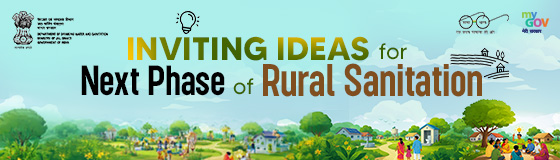
      Inviting Ideas for Next Phase of Rural Sanitation

      Facebook X
      Inviting Ideas for Next Phase of Rural Sanitation
      प्रारंभ तिथि 01/08/2026 - 11:49
      अंतिम तिथि 02/10/2026 - 23:45
      Time zone: IST (GMT +5.30 Hrs)
      Login to Participate
      क्षेत्र:
      Water & Sanitation
      Created : 1/08/2026
      532
      Total Comments
      376
      Users Participated

      In the last 12 years, SBM(G) has evolved from a sanitation programme into a nationwide movement that has improved public health, enhanced dignity of women, empowered communities and promoted sustainable rural development. Building on the achievement of Open Defecation Free (ODF) status, SBM(G) 2.0 has expanded its focus to sustaining sanitation outcomes through interventions such as Individual Household Latrines (IHHLs), Community Sanitary Complexes (CSCs), Solid and Liquid Waste Management, Plastic Waste Management, Faecal Sludge Management, GOBARdhan, Information, Education and Communication (IEC) and Capacity Building. The current phase of the Mission is scheduled to conclude in March 2027.

      As the Department prepares the roadmap for the next phase of rural sanitation, it seeks ideas from citizens to sustain and strengthen the gains achieved under SBM(G) while addressing emerging challenges related to waste management, resource recovery, environmental sustainability, Operation & Maintenance (O&M) and long-term community ownership of assets and outcomes. Innovative, practical and scalable solutions are required to enhance sanitation service delivery, strengthen waste management systems, promote behavioural change and accelerate the transition towards a circular waste-to-wealth economy. Given that the diversities of rural areas from urban cities, suggestions and ideas, specific to rural scenarios will be highly appreciated. Along with these, with peri-urban areas / villages also growing fast and having characteristics of urban centers, solutions specific for such areas are also being sought.

      The success of SBM(G) has been driven by the spirit of Jan Bhagidari (People's Participation). Citizens, Gram Panchayats, SHGs, youth, Swachhagrahis and other stakeholders have been at the forefront of transforming rural sanitation and their continued participation will remain critical for sustaining these achievements. 

      Accordingly, the Department of Drinking Water and Sanitation (DDWS), Ministry of Jal Shakti in collaboration with MyGov, invites citizens, youth, Gram Panchayats, SHGs, academic and research institutions, development partners and other stakeholders to share their suggestions and ideas for the next phase of rural sanitation programme on the following:

      1. Areas to be taken up (including existing areas where gaps may be remaining)
      2. New technological interventions for SWM, GWM, FSM.
      3. Rural Sanitation 
      4. Solutions for treating pollution in small nallahs/rivulets discharging into rivers in rural areas.
      5. Adoption of solutions based on traditional knowledge and ancient wisdom in new settings for rural India. 
      6. Any other area related to the programme.

      The suggestions received will help and guide the next phase of SBM(G) and contribute to building cleaner, healthier and environmentally sustainable villages that will be strong contributors for achieving the goal of Viksit Bharat@2047.

      Participation Guidelines 

      1. All Citizens, youth (including students), Gram Panchayats & SHGs, academic and research institutions, development partners, NGOs and other stakeholders are invited to contribute ideas for shaping the next phase of rural sanitation and solid-liquid waste management under Swachh Bharat Mission (Grameen).
      2. For detailed information about SBM(G) Phase II, applicants may visit the SBM(G) Phase II operational guidelines available on website of the Department (https://swachhbharatmission.ddws.gov.in). The guidelines can also be assessed through: https://swachhbharatmission.ddws.gov.in/sites/default/files/Guidelines/SBMG%20Phase-II%20Operational%20Guidelines.pdf 
      3. Suggestions may be submitted on any of the major components of SBM(G), including Individual Household Latrines (IHHLs), Community Sanitary Complexes (CSCs), Solid Waste Management, Liquid Waste Management, Plastic Waste Management, GOBARdhan, Faecal Sludge Management, Information, Education and Communication (IEC) and Capacity Building. Global best practices forming the bases of solution, may also duly mentioned and referred.
      4. Participants are encouraged to propose innovative, technology-driven, scientific, managerial, practical, feasible and scalable solutions to address rural sanitation challenges and strengthen long-term sustainability.
      5. Suggestions should focus on supporting the Department of Drinking Water and Sanitation (DDWS), Ministry of Jal Shakti, in developing the roadmap for the next phase of rural sanitation for India.
      6. Participants are required to register on the MyGov platform and submit their suggestions through the prescribed online form.

      TARACHANDGUPTA_13
      TARACHANDGUPTA_13
      2 weeks 5 days ago

      Respected Sir,Pranam.Spiritual teachings have immense role in true success of any schemes and programmes.The teachings of Jain Saints Acharya Mahapragyaji and Acharya Vidhya sagarji have great impact in change of behaviour.Audio’s & Videos of their teachings be uploaded on mission karamyogi portal and capacity building Programmes of ministry.In their teachings,main emphasis is on moral values & minimal livings.By good morals,next phase of SBM will bring more impact with no leakages in resource.

      Like 2
      Dislike 0
      • Reply
      Facebook X
      TARACHANDGUPTA_13
      TARACHANDGUPTA_13
      2 weeks 5 days ago

      Respected Sir,Pranam.Second suggestion to improve ethical working is,A signed integrity pledge from all employees (Officers & staff) be taken with annual IPR and be uploaded on portal.During vigilance week,very few nos of employees take pledge.It shall be made mandatory.IPR from class one officers be taken annually till age of 70 years.It will work psychologically & result will be change in habits up to some extent for ethical working.Repeat,..Repeat..practice,..practice..have impact.Regards

      Like 2
      Dislike 0
      • Reply
      Facebook X
      TARACHANDGUPTA_13
      TARACHANDGUPTA_13
      2 weeks 5 days ago

      Respected Sir,Pranam.To involve all in cleanliness and sanitation drive, to raise or improve ethical index,Some suggestions are humbly submitted.1 Toll free nos & WhatsApp nos of ACB/ CBI be displayed in Ministry,Head offices,regional,Distt.& other offices with message that if someone asks for bribes than call.There are scientific studies that by reading,seeing,talking,repeatedly have psychological impact and result is positive change.it had been experimented in some offices & results are good.

      Like 2
      Dislike 0
      • Reply
      Facebook X
      TARACHANDGUPTA_13
      TARACHANDGUPTA_13
      2 weeks 5 days ago

      Respected Sir,Pranam,When we talk to youths and villagers for good conduct,habits,character & no use of liquor,drugs,Tobacco,plastics,disposables etc& change in behaviour.There main counter argument is poor ethical index of Government.Poor ethical index in governance is cause of many evils.Poor quality construction,maintenance & unethical behaviour in proper delivery of citizens services.Villagers are aware of working in Government sector.A lots has been done by technology but more to be done

      Like 2
      Dislike 0
      • Reply
      Facebook X
      TARACHANDGUPTA_13
      TARACHANDGUPTA_13
      2 weeks 5 days ago

      Respected Sir,Pranam.No use of plastic,disposables etc to have minimum waste.Proper segration,collection,& reuse is must.Students and youths may be involved in this with their character building also I.e No to liquor & Tobacoo,Drugs etc.Acharya Tulsi Anubrat for Students,Youth,Govt. Employees,Buisnessman be taught to all concern,without discipline,good character,& good habits,results will not be as targeted.We have to go back to 40-50 years back for cleanliness of water wells,ponds,lands.Regards

      Like 2
      Dislike 0
      • Reply
      Facebook X
      TARACHANDGUPTA_13
      TARACHANDGUPTA_13
      2 weeks 5 days ago

      Respected Sir,Pranam.A lots have changed now.School up to 12th standard,Electricity,Road connectivity,Aganwadi,Subcentre,Panchayat etc.Negatives are Evils of Tobacoo,Liquor,Mobile use,Plastics and other single use disposables etc.We have SHG and nos of Govt.employees in rural areas now,some rural areas are semi urban.All Govt.employees shall be involved in this task for overall development of villages & innovative & sustainable ways by community participation & financial incentives also.Regards

      Like 2
      Dislike 0
      • Reply
      Facebook X
      TARACHANDGUPTA_13
      TARACHANDGUPTA_13
      2 weeks 5 days ago

      Respected Sir,Pranam.I had my brought up in village up to 25 years.No electricity,no road connectivity,water from open wells one km. away.No to liquor,drugs,Tobacoo etc.it was 40 years before.No use of plastic,clothes bags to bring articles from market like Rashan sugar etc.Most solid wastes were segregated& biodegradable.All lands and water bodies are free from plastic,only problem of open defection,it has resolved to some extent but poor quality construction & maintenance are major issues.

      Like 2
      Dislike 0
      • Reply
      Facebook X
      PayalAgarwal_84
      PayalAgarwal_84
      2 weeks 5 days ago

      Kapde dhone ke bad sare Pani ko ham wapas istemal kar sakte hain ek drum ya cement ki Tanki mein niche gitti bichhaye uske upar charcoal ki ek parat rakhen aur uske upar retir vidyalay ismein jab ham kapde dhone ke uprant Pani dalenge dudh chhan jaega saaf ho jaega aur ham aise hamare baudh Shala mein kheton mein kam mein le sakte hain Jahan mitti bhi sukhegi nahin agar ham is prakriya ko nahin apnate hain aur sidha Pani dalte Hain to mitti Sukh jaati hai kyunki sirf sabun mein chemical hota hai vahi agar ham barish ke Pani ko niche tankiyon mein ekattha Karen to ham peene ke liye nahin parantu kapde dhone ke liye kheton mein gadiyan dhone ke liye gharelu kamon mein nikalne wale Pani ko bhi ham hamare garden mein upyog kar sakte hain ki ham usko yog upbhog kar sakte hain under ground tank mein ekatthe hone wale Pani ko bahane ke bachaye ham kheton ki taraf ya garden ki taraf bhi pipe ke jarie upyog kar sakte hain barsat ke Pani ko ham Pi nahin sakte to kya kapde dhona gadiyan dhona saa

      Like 2
      Dislike 0
      • Reply
      Facebook X
      Athikala prasad rao
      AVVSSNV Prasad Rao
      2 weeks 6 days ago

      further to my comments awareness shall be created about wet and dry waste management. in villages waste managements centers are existed but no one takes responsibility to manage them . Hence one responsible person/ agency shall be appointed to effectively manage centers. If centralised waste management centers are existed , then proper transport of garbage shall be ensured.

      Like 1
      Dislike 0
      • Reply
      Facebook X
      Kotra Aditya
      KOTRA ADITYA
      2 weeks 6 days ago

      Future ready steps like plastic waste recycling to be done in villages before entering into the water bodies. Only 10% of solid plastic waste is recyclable in villages in India. Pollution of water bodies with plastic waste is a big problem. Plastic waste in water bodies causing diseases to people and animals. Animal husbandry loss is a significant problem in rural India with plastic in stomach of animals.

      Like 2
      Dislike 0
      • Reply
      Facebook X
      • First page « पहला
      • Previous page ‹ पिछला
      • …
      • पृष्ठ 22
      • पृष्ठ 23
      • पृष्ठ 24
      • पृष्ठ 25
      • Current page 26
      • पृष्ठ 27
      • पृष्ठ 28
      • पृष्ठ 29
      • पृष्ठ 30
      • …
      • Next page अगला ›
      • Last page आखरी »
      Please Log In to submit a comment.
      शामिल हों
      • समूह
      • कार्य
      • चर्चा करें
      • ब्लॉग
      • जनमत/सर्वेक्षण
      • वार्ता
      • क्विज़
      • MG प्राइम
      • अभियान
      • शपथ
      • पॉडकास्ट
      • मीडिया
      • पत्रिकाएँ
      जानें
      • माईगव: अवलोकन
      • माईगव से संबद्ध करें
      • माईगव के साथ काम करें
      • सर्कुलर
      • पल्स न्यूजलेटर
      • टेंडर्स
      • साप्ताहिक समाचार पत्र
      • Meity डैशबोर्ड
      • सेक्टर्स
      • कौशल
      • रूचि के क्षेत्र
      • आयु वर्ग
      • राष्ट्रीय कार्यक्रम
      • आर्काइव साइट्स
      सहायता और समर्थन
      • संपर्क करें
      • FAQ
      • प्रतिक्रिया
      • मदद
      • हमसे जुड़ें
      • सार्वजनिक शिकायत
      • साइट मैप
      • नियम एवं शर्तें
      • आधार का इस्तेमाल
      • वेब सूचना प्रबंधक
      • ICC
      • MyGov सोशल
      • पॉइंट्स और बैज्स
      • वेबसाइट की पॉलिसी
      उपयोगी लिंक्स
      • MyGov Quiz MyGov Quiz
      • Transforming India ट्रांसफॉर्मिंग इंडिया
      • MyGov Innovation माईगव इनोवेशन
      • MyGov Pledge माईगव संकल्प
      • MyGov Blog माईगव ब्लॉग
      • Self4Society सेल्फ4सोसायटी
      • Campus Program कैंपस कार्यक्रम
      • MyGov Saathi साथी
      Follow us
      Twitter Twitter 33.11 + Lakh Followers Facebook Facebook 15.14 + Lakh Followers Instagram Instagram 30.73 + Lakh Followers YouTube YouTube 7.43 + Lakh Subscribers LinkedIn LinkedIn 1.63 + Lakh Followers Messenger Messenger 1.60 + Lakh Followers WhatsApp WhatsApp 910.05 + Lakh Followers DailyHunt DailyHunt 7.2 + K Followers Public Public 85.5 + K Followers ShareChat ShareChat 82.22K Followers Snapchat Snapchat View All
      QR Code

      Download the MyGov Mobile App Join us in building a New India on the move.

      App Store Play Store
      NIC logo

      © Content owned, updated and maintained by the MyGov Cell. This website belongs to MyGov, Ministry of Electronics & Information Technology, Government of India.
      Platform is designed, developed and hosted by National Informatics Centre.

      CQW - MyGov certificateCertified Quality Website
      • Meity
      • Digital India
      • National Portal of India
      • Data Portal

      Copyright © MyGov 2014

      secure-1 - Last Updated: May 7, 2026
      Top
      This website uses cookies to provide a better user experience.
      By clicking accept, you agree to the policies outlined in the Cookie Settings.